At some point about five years ago, R came to me with a proposition: a dive shop for sale in the Caribbean and the purchase price included a house with a pool. We could give up our demanding day-to-day jobs and move full time to an island. I would run the bar and maybe add a hostel and R would drive the boat and go out with divers everyday. It sounded great (it still sounds great), but then I asked for details; in other words, what’s the catch? The catch is location, location, location.
Montserrat, the island in question, was for years known as the Emerald Isle of the Caribbean. The rolling green hills reminded the first European settlers — Irish Catholics who were running into difficulty with the Protestant population on Antigua — of their far away home. The problem is, one of those rolling green hills was a dormant volcano. The Soufrière Hills Volcano began erupting in 1995, the volcano that inspired Jimmy Buffet’s song Volcano (fast forward to about 6:10) has since wiped out the island’s largest towns and required the evacuation of all the other large population centers. 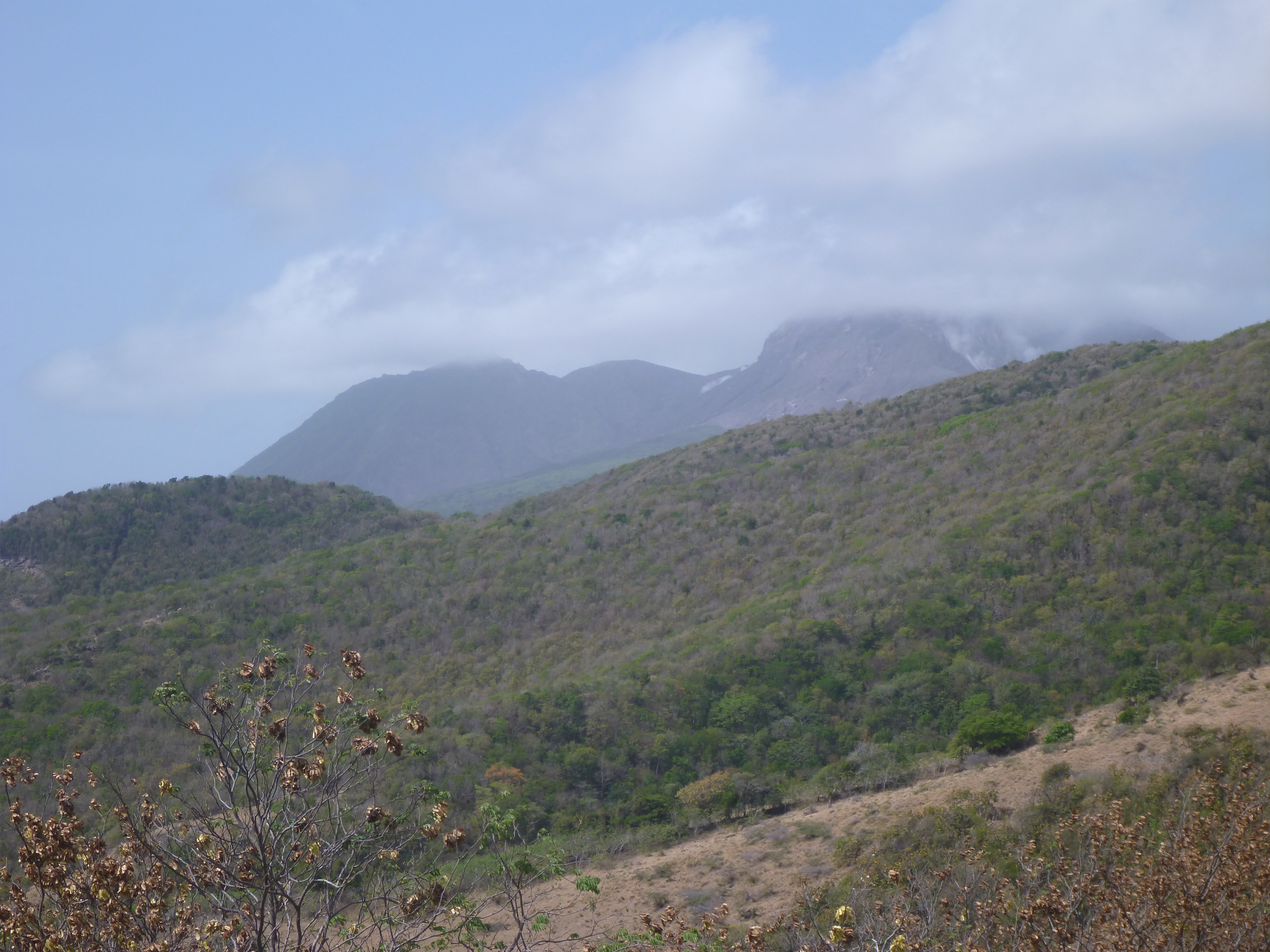
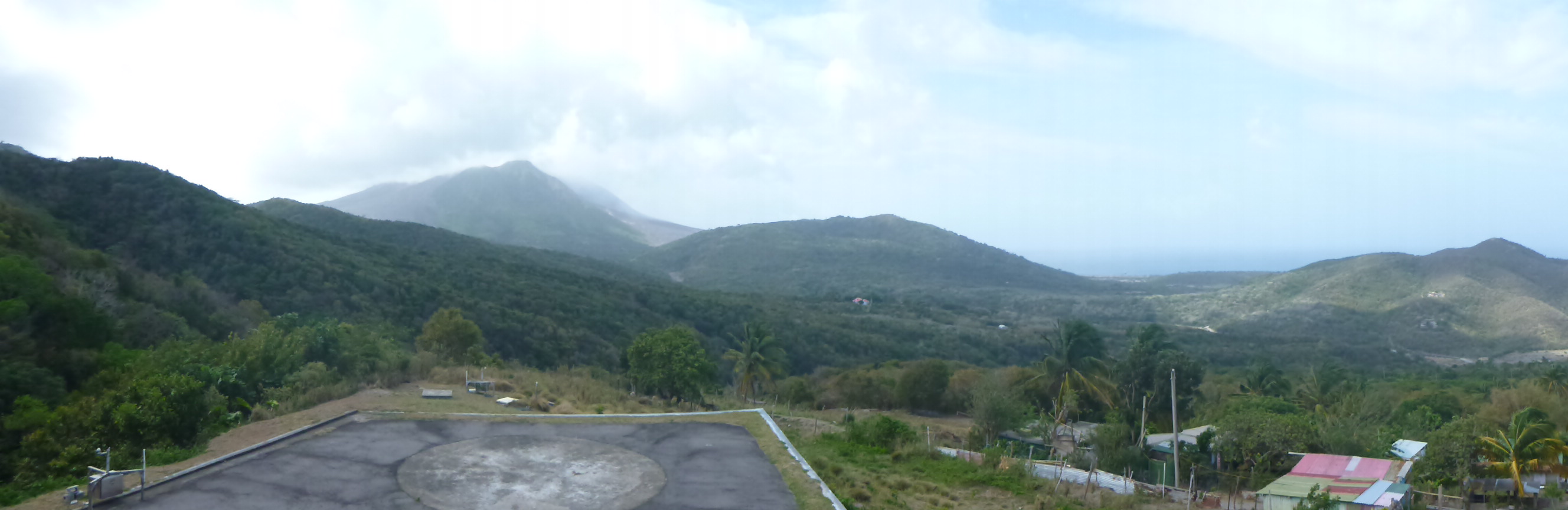
As our fabulous tour guide, Joe Phillip, told us, he and his family who lived in the Cork Hill area were told to pack a bag for a weekend evacuation in the late 90’s. They have not been able to move back in since (although Joe told us a perfect pirate story of going to his house to recover what he could). Joe gave us a detailed tour of the way the volcano changed the island.
Giving us a chance to see what the community had been like, Joe let us off at a church that served the neighborhood.
![IMG_0888[1]](http://www.sunnyspot.us/wp-content/uploads/2015/05/IMG_08881-e1431993977633.jpg)
The pews are stacked, unsalvaged, unused. The church’s register sits open in the pulpit; attendance on the last Sunday the church was in service was about 40. While the galvanized roof has been eaten away by the sulfuric acid that is created by the volcano’s ash, the wood structure remains intact.
To show us what it means to be told to just pack a bag, Joe took us to a local author’s house.
![IMG_0889[1]](http://www.sunnyspot.us/wp-content/uploads/2015/05/IMG_08891.jpg)
![IMG_0892[1]](http://www.sunnyspot.us/wp-content/uploads/2015/05/IMG_08921.jpg)
![IMG_0890[1]](http://www.sunnyspot.us/wp-content/uploads/2015/05/IMG_08901.jpg)
The whole house had about four inches of accumulated ash, covering bookshelves that looked something like ours at home in Westford: math, chemistry, and history texts surrounded by novels and coloring books.
Demonstrating the amount of accumulated ash and giving us a view of the utter devastation of Plymouth, Joe took us to a hotel on the hill that overlooked the old downtown.
I took this picture standing in what should have been the shallow end of the swimming pool.
![IMG_0894[1]](http://www.sunnyspot.us/wp-content/uploads/2015/05/IMG_08941.jpg)
R is looking out from the hotel deck over where Plymouth used to be.
![IMG_0895[1]](http://www.sunnyspot.us/wp-content/uploads/2015/05/IMG_08951.jpg)
When R first proposed that we purchase the Green Monkey and move to Montserrat, I said (1) we can’t buy a dive business until we’ve worked at one, (2) we can’t buy on an island we haven’t visited, and (3) what about the volcano? Green Monkey was luckier than this former dive shop we saw in Old Road Bay (where the Bay has been almost completely filled in by ash and sediment).
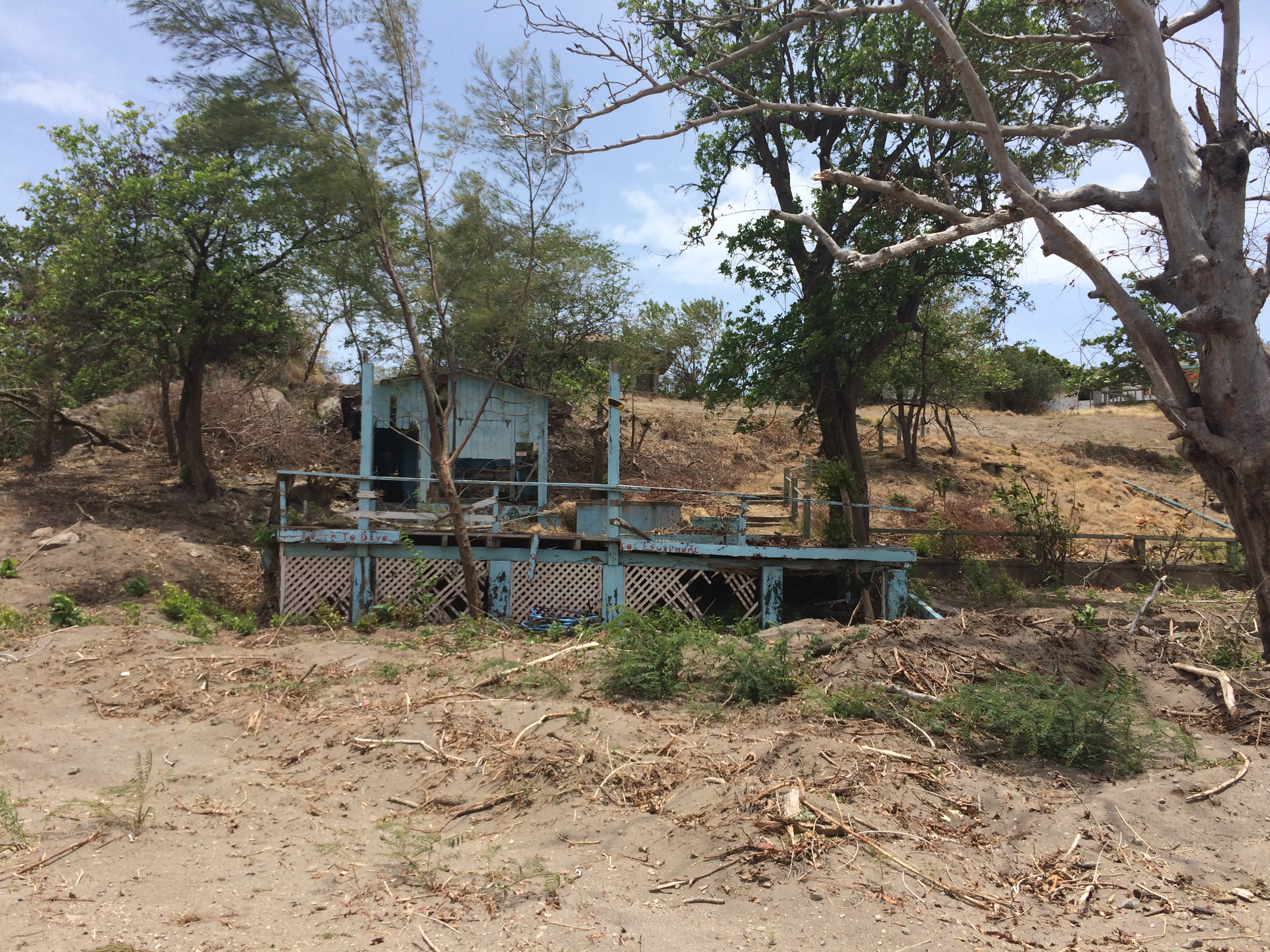
Green Monkey was located in Little Bay, where we anchored, which has been designated as the new capitol of Montserrat. But even outside of the volcano’s danger zone, the community seems to struggle to retain it’s sense of self and to create or salvage an identity separate from the volcano and its devastation. Before the volcano, Montserrat had a full time population of over 10,000 — still smaller than the town in which I grew up. Now, the full-time population is less than 5,000. If your community lost its history, half its population, and still had a volcano spitting ash and steam into the sky, what would you do?
I’m so glad we visited Montserrat. The people we met were truly lovely, but I’m not sure I’m up to the challenges that Montserrat is facing.